
Cart
0
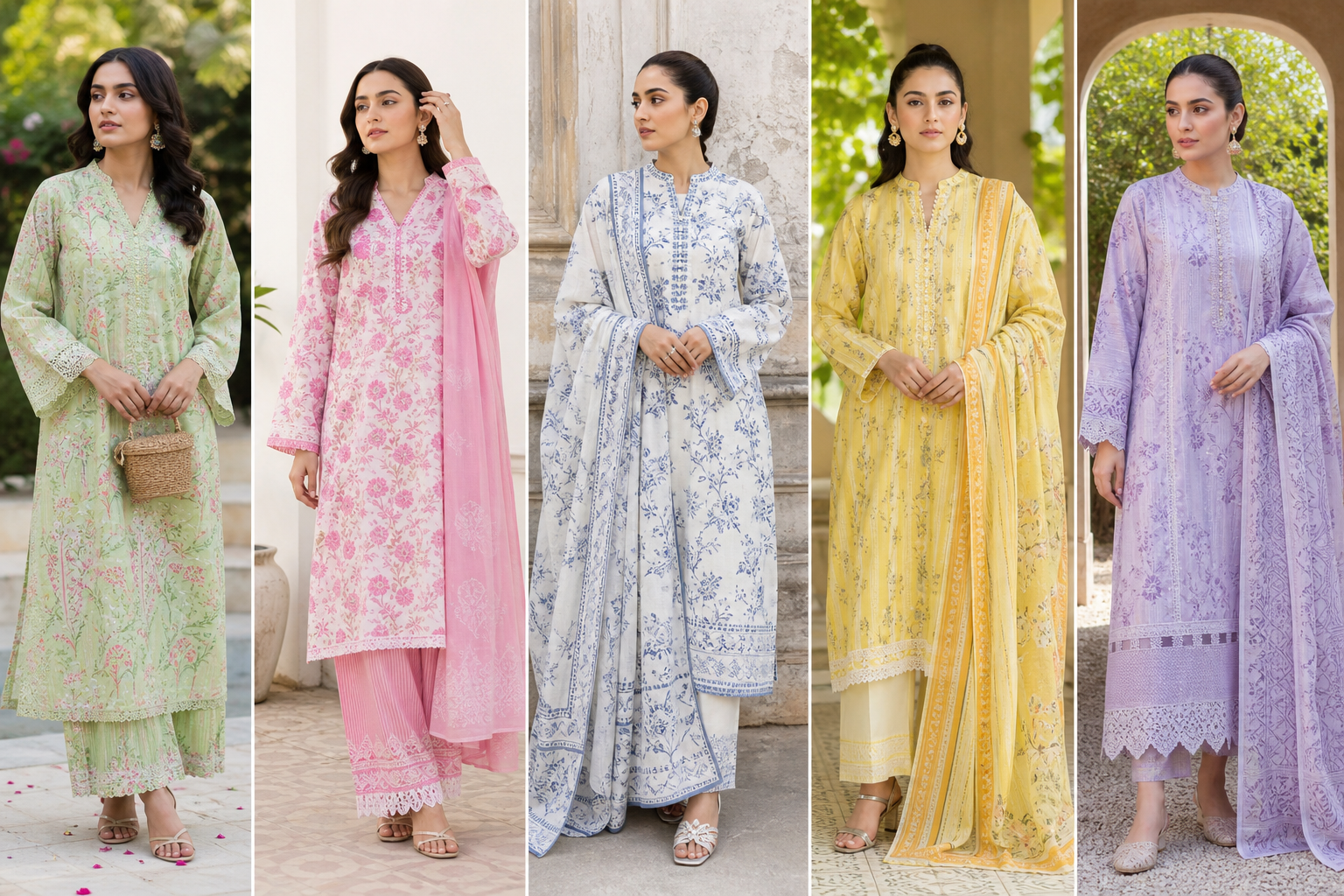
As the sun intensifies its embrace over the subcontinent, Pakistan's fashion landscape undergoes a vibrant metamorphosis. Cotton lawn emerges as the quintessential fabric for discerning women who refuse to compromise between sophistication and respite from sweltering temperatures. The forthcoming season heralds an eclectic amalgamation of heritage motifs and contemporary aesthetics, promising to redefine sartorial choices across urban centers and provincial heartlands alike.
Fashion enthusiasts and pragmatic shoppers converge in their quest for breathable textiles that marry functionality with visual splendor. The year 2026 introduces a paradigm shift in how Pakistani women approach warm-weather dressing, with cotton lawn positioned at the epicenter of this evolution. Understanding these emerging patterns empowers consumers to curate wardrobes that resonate with both climatic demands and personal expression.
1. Botanical Maximalism Meets Minimalist Silhouettes
The dichotomy between exuberant prints and restrained tailoring defines this season's most compelling narrative. Designers are orchestrating a visual symphony wherein oversized floral motifs—think monsoon-drenched hibiscus and jasmine clusters—sprawl across uncluttered kameez silhouettes. This juxtaposition allows the fabric's inherent breathability to shine while delivering dramatic visual impact.
Microfiber lawn constructions enable intricate botanical renderings with unprecedented clarity. The printing technology advances of recent years facilitate gradients that mimic nature's own watercolor effects, transforming each three-piece ensemble into wearable artistry. Dupatta treatments often feature inverse color schemes, creating cohesive yet dynamic coordination.
Color Palettes Inspired by Pakistani Landscapes
Chromatic selections draw inspiration from the nation's diverse topography—from the terracotta hues of Mohenjo-Daro to the azure brilliance of Attabad Lake. Burnt sienna foundations anchored with emerald accents pay homage to agricultural heritage, while powder blue bases punctuated with coral evoke coastal serenity. These earthbound tones contrast sharply with the neon experimentation of previous seasons, signaling a return to organic beauty.
The substrates themselves undergo chemical-free mercerization processes that enhance dye absorption, resulting in pigments that maintain vibrancy through multiple laundry cycles. This technical refinement addresses longstanding consumer concerns about colorfastness in lawn fabrics exposed to harsh sunlight.
Strategic Negative Space in Pattern Design
Contemporary renditions embrace purposeful emptiness. Rather than saturating every square inch with embellishment, designers allocate generous breathing room within compositions. This measured approach prevents visual fatigue and allows air circulation against the skin—a critical consideration during humidity spikes that characterize Pakistani summers.
Placement printing techniques concentrate motifs around necklines and hemlines, leaving torso panels relatively sparse. This distribution not only creates flattering optical illusions but also reduces fabric weight, enhancing the drape that lawn aficionados cherish.
Artisanal Revival: Handblock印刷 Renaissance
Mechanized production faces formidable competition from heritage craftsmanship experiencing renewed appreciation. Handblock printing workshops in Karachi's older districts and Multan's craft enclaves report unprecedented order volumes as consumers gravitate toward textiles bearing human touch. Each irregularity and slight color bleed becomes a testament to authentic creation rather than manufacturing flaw.
The labor-intensive nature of this technique translates to higher price points, yet the target demographic increasingly perceives this premium as investment in cultural preservation. Natural dyes derived from indigo, pomegranate rind, and madder root align with global sustainability consciousness while delivering earthy sophistication impossible to replicate through synthetic means.
The resurgence of handblock artistry represents more than aesthetic preference—it embodies a collective desire to anchor modernity in ancestral wisdom, transforming everyday garments into repositories of living tradition.
Geometric Tessellations with Cultural Resonance
Islamic geometric patterns undergo contemporary reinterpretation through lawn mediums. Eight-pointed stars interlocking with hexagonal frameworks create mesmerizing optical effects that honor architectural marvels like Lahore's Wazir Khan Mosque. These mathematical precision patterns paradoxically feel both structured and fluid when executed on supple lawn weaves.
Artisans employ wooden blocks carved from sheesham timber, each tool requiring weeks of meticulous craftsmanship before becoming production-ready. The tactile texture imparted by manual stamping adds imperceptible dimensionality that elevates the fabric beyond mere printed surface.
Discovering Curated Excellence at Ameer Sons
Navigating the proliferation of cotton lawn offerings requires discernment and access to collections that exemplify quality benchmarks. The frontpage collection at Ameer Sons presents a thoughtfully assembled selection that anticipates the very trends shaping summer 2026. Each ensemble undergoes rigorous evaluation for fabric composition, dye integrity, and construction excellence before earning placement in this premiere showcase.
For busy professionals and parents juggling multiple responsibilities, this curated approach eliminates the overwhelm of sifting through countless options. The collection features printed and embroidered three-piece sets that integrate emerging design directions—from botanical maximalism to artisanal handwork—while maintaining the skin-friendly properties essential for Pakistan's climate. Complimentary shipping across Pakistan removes geographical barriers, while the seven-day return policy provides purchase confidence when evaluating fit and color accuracy in natural lighting.
Featured Products
The emphasis on timeless elegance ensures these acquisitions transcend fleeting fads, offering wardrobe longevity that justifies investment. Children's variants mirror adult designs, enabling coordinated family aesthetics for festive occasions without sacrificing the playful elements young wearers demand.
3. Tonal Embroidery: The Art of Subtlety
Embellishment philosophies undergo radical restraint as discerning consumers reject ostentatious ornamentation. Tonal embroidery—wherein thread colors match or subtly contrast with base fabric—creates textural intrigue perceptible primarily through light interaction and close examination. This whisper-quiet luxury appeals to mature sensibilities seeking sophistication without spectacle.
Chikankari techniques adapted from Lucknowi traditions find new expression through Pakistani interpretations. Shadow work along necklines and cuff edges produces diaphanous effects, while satin stitch concentrations at strategic points provide weighted elegance that balances lawn's inherent lightness.
Thread Innovation and Durability
Mercerized cotton threads treated with anti-microbial agents address concerns about embroidery deterioration in humid storage conditions. These technical fibers maintain tensile strength through repeated laundering while resisting the color migration that previously plagued lighter lawn shades.
Dimensional effects emerge through thread thickness variation within single motifs. Fine filaments outline delicate leaf veins while thicker plies render flower centers, creating relief patterns that engage tactile senses without overwhelming visual fields.
| Embroidery Type | Best Suited For | Maintenance Level |
|---|---|---|
| Chikankari Shadow Work | Formal daywear, evening events | Low - gentle handwash recommended |
| Tonal Satin Stitch | Office settings, casual gatherings | Medium - machine wash on delicate cycle |
| Cutwork with Embroidered Borders | Festive occasions, wedding functions | High - professional cleaning advised |
4. Hybrid Weaves: The Voile-Lawn Convergence
Textile engineers pioneer blended constructions that appropriate desirable characteristics from related fabric families. The lawn-voile hybrid maintains lawn's crisp hand while incorporating voile's ethereal translucency. This innovation addresses the perennial challenge of opacity without sacrificing breathability or adding oppressive weight.
The warp-weft manipulation involves alternating yarn densities—tighter lawn-specification threads in structural areas transitioning to looser voile counts in decorative sections. This localized engineering allows designers to create strategic sheerness in sleeves or dupatta sections while ensuring modest coverage across bodice panels.
Performance Enhancements Through Fabric Technology
Moisture-wicking treatments applied at the finishing stage transform cotton lawn from passive fabric to active climate manager. These invisible coatings pull perspiration away from skin surfaces, promoting rapid evaporation that maintains comfort during extended outdoor exposure or crowded indoor events.
Wrinkle-resistant formulations address the primary consumer grievance regarding lawn's propensity for creasing. While purists argue these treatments compromise natural fiber integrity, practical wearers appreciate the reduced ironing burden—particularly relevant for mothers managing children's wardrobes alongside their own.
5. Nostalgic Prints with Contemporary Scaling
Archival pattern libraries undergo digital resurrection as designers mine decades-old motifs for inspiration. The paisley resurgence exemplifies this trend, with traditional buta shapes enlarged to statement proportions or miniaturized into delicate scatter patterns. This temporal bridging satisfies dual desires for heritage connection and modern relevance.
Digital printing capabilities enable precise color registration across complex multi-hue designs previously achievable only through laborious screen-printing. Seven to nine color separations create photographic realism in floral studies or abstract compositions that blur boundaries between textile and fine art.
Customization and Personalization Opportunities
Forward-thinking retailers offer monogramming services and bespoke color adjustments, transforming ready-to-wear lawn suits into semi-custom creations. This democratization of personalization appeals to consumers seeking individuality within accessible price frameworks.
Small-batch production runs featuring limited-edition prints generate urgency and exclusivity. Conscious shoppers appreciate the reduced environmental footprint of demand-responsive manufacturing compared to mass-produced inventory vulnerable to disposal when trends shift.
Styling Versatility Across Occasions
The cotton lawn's chameleonic nature enables seamless transitions between divergent social contexts. A botanical-printed ensemble appropriate for morning market runs transforms into evening-ready attire through accessory substitution—swapping casual khussas for embellished heels and adding statement jewelry elevates the entire presentation.
Layering strategies extend wear into transitional weather periods. Lightweight cotton lawn shirts pair effectively with denim or structured trousers when temperatures fluctuate, while dupattas double as scarves or wraps during air-conditioned indoor intervals.
Mix-and-Match Philosophy for Maximum Wardrobe Efficiency
Savvy consumers adopt modular approaches, purchasing coordinating pieces from different sets to exponentially increase combination possibilities. A neutral-toned trouser anchors multiple vibrant kurtas, while a versatile dupatta complements various color families. This strategic acquisition model optimizes financial investment while maintaining visual variety.
- Invest in foundational neutrals—ivory, beige, and soft grey trousers that partner with bold prints
- Select dupatta colors that bridge multiple kurta shades within your existing collection
- Prioritize classic silhouettes over trendy cuts to ensure longevity beyond single seasons
- Consider embroidery placement when mixing pieces to avoid competing focal points
Care and Maintenance for Longevity
Preserving cotton lawn's structural integrity and chromatic vibrancy demands specific handling protocols. Initial washes should occur separately in cold water with pH-neutral detergents to set dyes and prevent color transfer. Avoiding chlorine-based bleaches protects fiber strength and prevents yellowing in lighter shades.
Air-drying in shaded areas prevents UV-induced fading while maintaining fabric hand. Direct sunlight exposure, though effective for rapid drying, accelerates pigment degradation and fiber brittleness. Ironing while slightly damp—ideally with steam settings—restores crispness without scorching delicate embroidery threads.
Storage Solutions for Off-Season Preservation
Climate-controlled environments prevent mildew proliferation during monsoon storage periods. Breathable cotton garment bags allow air circulation while blocking dust accumulation. Cedar blocks or lavender sachets deter fabric-damaging insects without introducing chemical odors that permeate porous cotton fibers.
Folding along natural seam lines rather than arbitrary creases minimizes permanent wrinkle formation. Periodic refolds redistribute pressure points, preventing the set-in lines that characterize poorly stored garments.
Frequently Asked Questions
What distinguishes cotton lawn from regular cotton fabric?
Cotton lawn undergoes specialized weaving with finer, tightly twisted yarns that create a smooth, slightly lustrous surface. The higher thread count compared to standard cotton produces a lighter weight fabric with superior drape and breathability, making it particularly suitable for intricate printing and embroidery work.
How can I verify authentic lawn quality when purchasing online?
Examine product descriptions for thread count specifications—premium lawn typically ranges between 80-100 threads per square inch. Reputable retailers provide fabric composition details and care instructions. Customer reviews mentioning breathability, opacity, and colorfastness offer practical insights. Established vendors like Ameer Sons with return policies enable risk-free quality assessment.
Are embroidered lawn suits suitable for Pakistan's hottest months?
Tonal embroidery and minimal embellishment designs maintain lawn's cooling properties while adding visual interest. Concentrating threadwork at necklines and cuffs rather than full-body coverage preserves breathability. Hybrid weaves with moisture-wicking treatments enhance comfort during peak summer temperatures.
How do current trends balance modesty requirements with contemporary aesthetics?
Modern lawn designs achieve coverage through intelligent pattern placement and strategic fabric engineering rather than heavy layering. Hybrid weaves provide opacity without added weight, while longer kurta lengths and fuller silhouettes align with traditional modesty standards while incorporating current color palettes and prints.
Embracing Seasonal Transitions with Confidence
The cotton lawn trends emerging for summer 2026 reflect broader cultural movements valuing authenticity, sustainability, and thoughtful consumption. Pakistani women navigating professional obligations, family responsibilities, and social engagements require wardrobes that perform across multiple dimensions—aesthetic appeal, practical comfort, cultural appropriateness, and economic sensibility.
These five directional shifts—botanical maximalism tempered by minimalist construction, artisanal handblock revival, tonal embroidery sophistication, hybrid fabric innovations, and nostalgic prints reimagined through contemporary lenses—collectively address this multifaceted demand. They honor heritage while embracing technological advancement, satisfy visual aspirations while respecting climatic realities, and offer accessibility without compromising quality.
As temperature gauges climb and humidity envelops the landscape, cotton lawn establishes itself not merely as seasonal fabric but as strategic wardrobe foundation. The discerning consumer armed with trend knowledge and access to curated collections enters summer equipped for whatever social, professional, or personal occasions arise. The intersection of tradition and innovation, local craftsmanship and global awareness, creates a uniquely Pakistani fashion narrative that resonates far beyond geographical boundaries.
Preparation for the coming season begins with informed selections that prioritize versatility, quality, and personal resonance. The trends outlined here provide directional guidance rather than prescriptive mandates, encouraging individual interpretation that honors personal style while participating in collective aesthetic evolution. Summer 2026 promises to be a season where cotton lawn reaffirms its position as the fabric of choice for women who refuse to choose between looking exceptional and feeling comfortable.

